
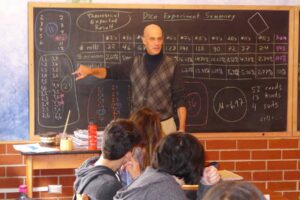
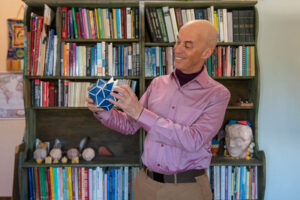


Teacher: Niek Slooter (Read more about his biography here)
Dates for 4-Week Course: March 29 to April 30, 2027 (with one week off for Spring Break)
Times for Live Sessions: Monday through Thursday, Starting at 9:15am MT (which is 11:15am ET and 8:15am PT). Each live session lasts between 50 and 70 minutes. On Friday at 9:15am MT there will be student group meetings.
Course Description
This course will cover homeostasis, reproduction, and hormones. During the first week, we will focus on the organs in the thorax and abdomen, including all the digestive and digestion-supporting organs. Each organ will get comprehensive descriptions and detailed drawings. Common diseases of these organs will be discussed, including how to reduce the risk of related diseases. These so-called “sensors, control centres and effectors” of homeostasis are essential for a healthy and balanced life. This homeostasis, the self-regulating process by which biological systems maintain a stable state, is necessary for survival. So how do these organs work, which organ is doing what, and how are they related to each other? The way this influences our bodies, for example, our blood circulation, respiration, heart, and other vital organs, will be explored.
From there, we will look in greater detail at our brain, nerves, and spinal cord, and how our homeostasis influences these. We will look into different variables like temperature, pH, blood sugar, and electrolytes. We will learn about how, through positive and negative feedback loops, the levels of these variables are maintained despite external changes. Details about the anatomy and physiology of our brain, its development, and how neurotransmitters work will also be explored. This will lead us to how hormones work, what functions they have, how they influence our daily lives, how we feel, and what is happening in our bodies.
The last part of this course will focus on the reproductive organs, reproduction of humans and other mammals, and reproductive ways of other organisms. The course will end with an open-book test on which the students can contribute by sharing questions and answers they come up with themselves.
Topics covered:
•Digestive organs
• Inner organs that support digestion processes
• Organs like the pancreas & liver that influence blood sugar levels
• Homeostasis of the human body
• Nerves and spinal cord
• Sympathetic and parasympathetic nervous system
• Hormones and their functions
• Neurotransmitters
• Reproductive organs
• Reproduction of other organisms